

What Fashion Can Teach Us About Styling an Outdoor Space
Fashion and garden design might seem like very different disciplines, but they have more in common than you might expect. Both rely on proportion, texture, colour and the careful combination of statement pieces with quieter foundations.
Just as a successful outfit rarely involves wearing every trend at once, an attractive outdoor space does not need to be overloaded with features. Borrowing a few principles from fashion can help create a garden that feels considered, personal and capable of evolving over time.
I personally love home design and DIY as much as I love fashion. If you have an eye for creativity, this is often the case! I already have so many plans for my outdoor space when Christen and I live together!
Start With the Equivalent of a Great Basic
Most versatile wardrobes are built around reliable pieces that can be styled in different ways. Gardens can benefit from exactly the same thinking.
Instead of beginning with cushions, accessories and decorative features, concentrate on the surfaces that will form the foundation of the space.
Choosing relatively versatile outdoor tiles can create a backdrop that works with different furniture, planting and colour schemes. Quorn Stone’s current outdoor collection includes limestone and porcelain paving across numerous colours, sizes and finishes, which works for everything from small courtyards to larger garden renovations.
Once the foundation is right, changing the surrounding look becomes considerably easier. Just as it does with your outfit.
Understand the Power of Layering
One of the simplest ways to make an outfit more interesting is to introduce layers. Outdoor spaces can use the same technique.
Begin with the patio or terrace, then gradually add furniture, planting, textiles and lighting. A stone-effect surface might be softened with timber furniture, which can then be layered with cushions, throws and surrounding greenery.
The advantage of layering is flexibility. Rather than relying on one dramatic feature to create the entire look, the character of the garden develops through several complementary elements. Plus, this can often be changed during the different seasons, without much trouble at all.

Mix Textures Rather Than Matching Everything
An outfit made entirely from one fabric can look flat, even when every individual piece is attractive. Outdoor spaces face a similar problem when every surface is too closely matched. Contrast creates interest.
Smooth metal furniture might sit against textured paving. Soft outdoor fabrics can contrast with stone, while timber brings another natural texture into the composition. Planting adds further layers through glossy leaves, grasses, flowers and structural evergreens.
The aim is not to make everything different. Instead, choose a limited collection of textures that complement one another. A cute little pond can add even more dimension to the look, as well as being beneficial for the environment.
Find Your Statement Piece
Fashion often relies on one item doing most of the talking. It might be a patterned coat, an unusual pair of shoes or a striking piece of jewellery. Gardens can have statement pieces too.
A sculptural tree, oversized dining table, colourful outdoor sofa, water fountain, fire bowl or beautifully designed pergola could become the feature around which everything else is organised.
The key is restraint. If the furniture, flooring, planting, lighting and accessories are all competing to become the main attraction, the garden can quickly feel cluttered. Give one or two features greater prominence and allow the remaining elements to support them.
Use Colour Like an Accessory
One of the benefits of keeping expensive or permanent elements relatively versatile is that colour can be introduced through things that are easier to change.
Outdoor cushions, parasols, planters and seasonal flowers can all bring personality to a garden without requiring a complete redesign.
This is similar to building a wardrobe around neutral staples and changing the look with accessories. Terracotta and warm reds might dominate one year, while greens, blues or softer neutrals could take their place later.
The underlying garden still works because its most permanent elements were never dependent on one particular trend. It’s better that they work with the current season, just like our clothing.
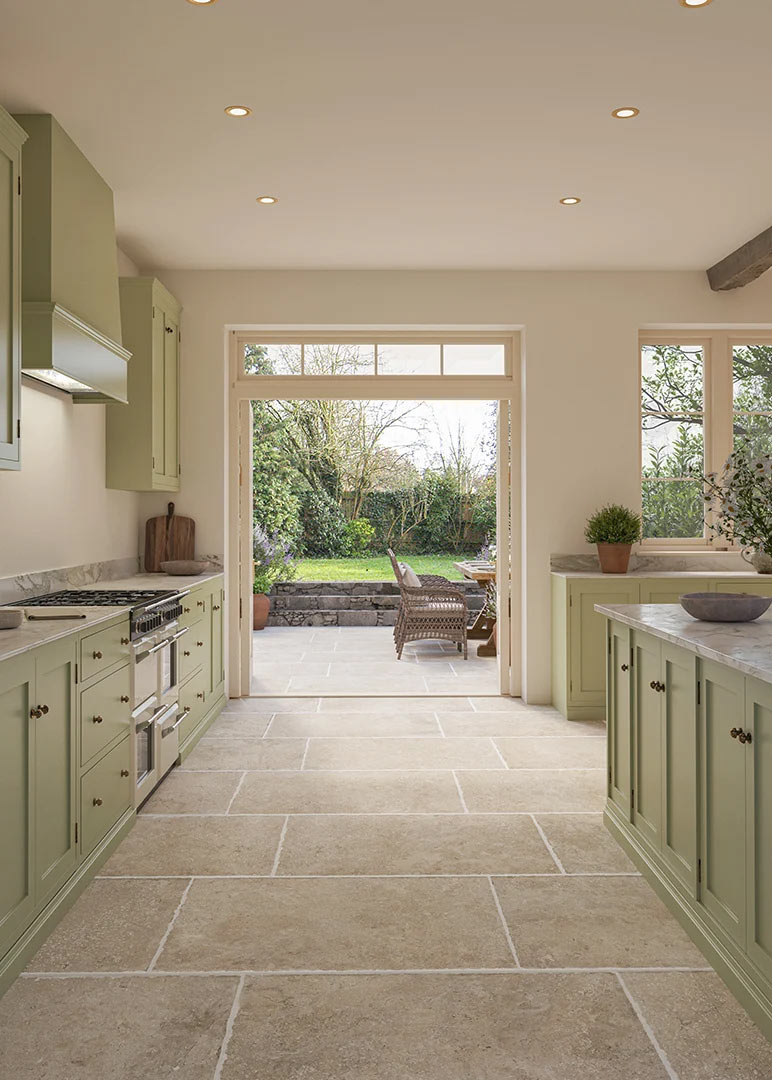
Think About Indoor-Outdoor Coordination
There is a reason people often consider whether shoes, bags and jackets work with the rest of an outfit. Individual pieces matter, but so does the overall composition. The same principle can be applied where a patio meets a kitchen or living area.
Look at the garden from inside the house and consider whether the colours and materials feel connected. This does not require using identical finishes everywhere. Repeating a timber tone, stone colour or accent shade may be enough to establish a relationship between the spaces.
Many exterior stone tiles are also available in matching indoor formats, offering another way to create a stronger sense of continuity between home and garden. I think this is especially important if you host a lot of events that call for outdoor/indoor activity!
Discover more from FORD LA FEMME
Subscribe to get the latest posts sent to your email.